
"Not as mediators but as media": Jelf's Bampton Lectures and sacerdotalist claims

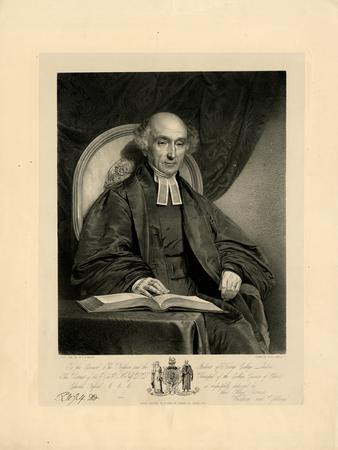
At the close of the third of his 1844 Bampton Lectures, An inquiry into the means of grace, their mutual connection, and combined use, with especial reference to the Church of England, Jelf - one of those whom Nockles lists as the 'Zs', the post-1833 continuation of the Old High tradition - gives expression to the Old High rejection of sacerdotalist claims. "A due appreciation of the pastoral functions, a persuasion of their Divine origin and of their Divine efficacy", he insists, does not lead to "sacerdotal pride". This is a crucial aspect of Old High piety, entirely incompatible with a sacerdotalism which necessarily exalts clergy over laity. The experience of the Old High parson - often married, with domestic responsibilities, not receiving holy Communion apart from his parishioners, participating in communal and political affairs alongside his neighbours, ministering the modest rites of the Prayer Book - stood apart from the experience of a sacerdotal caste. (It is worth noting how this would signal a significant gulf between the Old High tradition and those who followed the Tractarians with Ritualism and Anglo-catholicism.) Jelf particularly notes how the refusal to give the title 'Sacrament of the Gospel' to Holy Orders exemplifies this rejection of sacerdotalism:

we dread the undue exaltation of "the gift" of Orders under cover of an ambiguous name; we refuse to place it on a level with the two holy "Sacraments of the Gospel", and to degrade Baptism and the holy Eucharist in order to "magnify the office" of those who administer them . Knowing the corruption to which this error has led the Church of Rome, we refuse, then, to call Holy Orders "a Sacrament"; whilst, on the other hand, dreading equally the depreciation to which levellers would reduce "the gift", we place it amongst the sacramentals, and believe it to be a means of grace. In a word, we regard the Clergy not as mediators, but as media; as the channels, not the depositaries of grace; as the stewards of God's household, not as lords over His heritage: we reverence for Christ's sake the dispensers of the Divine mysteries in the Font and at the Lord's Table, whilst we abhor that impiety, which, as a consequence of the error of transubstantiation, has led some of the Romish hierarchy to arrogate to themselves, or to suffer their advocates to claim for them, the title of "creators of the Body of their Creator". God of His infinite mercy grant us grace, that we may continue to "preach not ourselves, but Christ Jesus the Lord, and ourselves your servants for Jesus' sake".
Comments

Popular posts from this blog

Why I support the ordination of women: a High Church reflection

A number of commenters on this blog have asked about my occasional expressions of support for the ordination of women to all three orders.  With some hesitation, I have decided to post a summary of my own views on this matter.  The hesitation is because I have sought on this blog to focus on issues and themes which can unify those who identify with or have respect (grudging or otherwise!) for what we might term 'classical' Anglicanism (the Anglicanism of the Formularies and - yes - of the Old High Church tradition).  Some oppose the ordination of women (and I have friends and colleagues who do so, Anglo-Catholic, High Church, and Reformed Evangelical).  Some of us support it (again, friends and colleagues covering a wide range of theological traditions). Below, I have organised my thinking around 5 points (needless to say, no reference to Dort is implied). 1. The Declaration for Subscription required of clergy in the Church of Ireland states: (6) I promise to submit ...

How the Old High tradition continued

Charles Gore's 1914 letter to the clergy of his diocese, ' The Basis of Anglican Fellowship ', can be regarded as a classical expression of the Prayer Book Catholic tradition.  A key part of the letter - entitled 'Romanizing in the Church of England' - addressed the "Catholic movement", questioning beliefs and practices within it which tended to "a position which makes it very difficult for its extremer representatives to give an intelligible reason why they are not Roman Catholics".  Gore provides the outlines of an alternative account and experience of catholicity within Anglicanism, defined by three characteristics.  What is particularly interesting about these characteristics is their continuity with the older High Church tradition.  Indeed, the central characteristic as set out by Gore was integral to High Church claims over centuries: To accept the Anglican position as valid, in any sense, is to appeal behind the Pope and the authority of t...

Pride, progressive sectarianism, and TEC on Facebook

Let me begin this post with an assumption that will be rejected by some readers of laudable Practice , but affirmed by other readers. Observing Pride is an understandable aspect of the public ministry of TEC.  On previous occasions , I have rather robustly called for TEC to be much more aware and respectful of the social conservatism of the Red states and regions in which it ministers. A failure to do so risks TEC declining yet further into the irrelevance of progressive sectarianism.  At the same time, TEC also obviously ministers in deep Blue states and metropolitan areas - and is the only Mainline Protestant tradition in which a majority of its members vote Democrat .* With Pride now an established civic commemoration, particularly in such contexts, there is a case for TEC affirming those aspects of Pride - the dignity of gay men and lesbian women, their contribution to civic life, and their place in the church's life - which cohere with a Christian moral vision. (I will n...