
"Nothing sectarian, nothing that is not Catholic": Bishop Phillpotts' 1842 Visitation Charge and Prayer Book piety
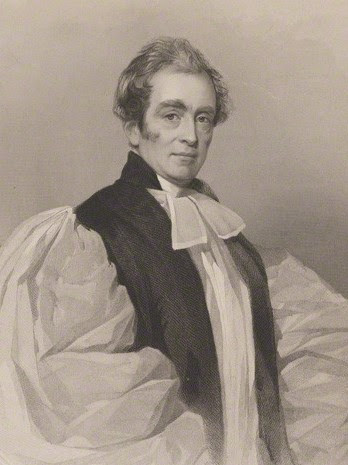
Today laudable Practice resumes the series of weekly posts from a rich seam of Old High teaching, the responses to Tract XC by Old High bishops in the visitation charges of the early 1840s.  The focus of these posts is not so much on the well-known critique of Tract XC articulated in these charges but, rather, on what these visitation charges reveal about the teaching, piety, concerns, and vitality of the Old High tradition nearly a decade after the emergence of the Oxford Movement.

Having considered the 1842 charge of Newman's diocesan, Bagot of Oxford, we turn now to the charge given in the same year by Henry Phillpotts, Bishop of Exeter 1831-69. In this extract from the charge, Phillpotts expounds an enduring Old High conviction - that the Prayer Book offers a much richer proclamation of the Gospel than a reliance on preaching alone. Central to this was the recognition of Prayer Book as deeply rooted in evangelical, catholic faith, against sectarian alternatives. Here Phillpotts offer a vision of Old High parish ministry, with the Prayer Book a means of ministering to us life in Christ, "from the font to the grave":

what is to preach the Gospel? Is it merely the delivery of oral discourses? In proclaiming the Gospel to the heathen, this may, indeed, be the best or the only way. But in the instruction of those who have been already brought, by God's mercy, into the fold of Christ, can the same be truly said? What is catechising? What the reading publicly in the congregation the written Word of God? What the intelligent and devout use of our own admirable Liturgy? Can any sermons bear comparison, even as instruments of Christian instruction, with the wisdom, the perspicuity, the fulness, the wonderfully proportioned exhibition of the whole Will of God, which that blessed book presents? Of all its praises, this, its observance of the just analogy of faith, is perhaps the highest. In it, no one portion of evangelical truth is unduly exalted above the rest; no favourite doctrine can be there detected - nothing sectarian - nothing that is not Catholic, in its tone, as in its sense. Only teach your people to know the method, the system, of the whole book, and the purpose, as well as the meaning, of every part. Teach them, in short, to know the riches of the treasure which is there given into their hands. Shew to them, that it is not merely a manual of daily devotion, but also an epitome of a Christian's life: of his life, said I? - ay, and of his death. From the font to the grave, it seeks to shed its enlightening, its chastening, its consoling influence on all we do and all we suffer your part to teach your people to use it as they ought; to pray its prayers; to "pray with the spirit, and to pray with the understanding also". And then be assured that they will listen even to the preacher, if not with the same barren wonder at his fancied talents, or the same brief subjection of their feelings to his rhetoric, yet with minds and hearts better fitted to receive, and to retain, whatever of good they may hear from him.

Comments

Popular posts from this blog

Why I support the ordination of women: a High Church reflection

A number of commenters on this blog have asked about my occasional expressions of support for the ordination of women to all three orders.  With some hesitation, I have decided to post a summary of my own views on this matter.  The hesitation is because I have sought on this blog to focus on issues and themes which can unify those who identify with or have respect (grudging or otherwise!) for what we might term 'classical' Anglicanism (the Anglicanism of the Formularies and - yes - of the Old High Church tradition).  Some oppose the ordination of women (and I have friends and colleagues who do so, Anglo-Catholic, High Church, and Reformed Evangelical).  Some of us support it (again, friends and colleagues covering a wide range of theological traditions). Below, I have organised my thinking around 5 points (needless to say, no reference to Dort is implied). 1. The Declaration for Subscription required of clergy in the Church of Ireland states: (6) I promise to submit ...

How the Old High tradition continued

Charles Gore's 1914 letter to the clergy of his diocese, ' The Basis of Anglican Fellowship ', can be regarded as a classical expression of the Prayer Book Catholic tradition.  A key part of the letter - entitled 'Romanizing in the Church of England' - addressed the "Catholic movement", questioning beliefs and practices within it which tended to "a position which makes it very difficult for its extremer representatives to give an intelligible reason why they are not Roman Catholics".  Gore provides the outlines of an alternative account and experience of catholicity within Anglicanism, defined by three characteristics.  What is particularly interesting about these characteristics is their continuity with the older High Church tradition.  Indeed, the central characteristic as set out by Gore was integral to High Church claims over centuries: To accept the Anglican position as valid, in any sense, is to appeal behind the Pope and the authority of t...

1928 practices and the 1979 book: unthinking conservatism or popular piety?

Those responsible for Earth & Altar - a new blog emanating from a group within TEC - are to be congratulated for an excellent contribution to wider Anglican discussion and debate. The commitment to "an expansively conceived credal orthodoxy as fully compatible with LGBTQ inclusion, gender equality, and racial justice" is an important part of a wider retrieval of creedal orthodoxy within what we might call the post-liberal generation. It is in this spirit that I want to respond to a recent post on the site by Andrew McGowan , Dean of the Berkeley Divinity School at Yale and Professor of Anglican Studies at Yale Divinity School.  Against the background of another round of "ill-defined" liturgical revision in TEC, he understandably urges that a fuller reception of the 1979 BCP should occur before further reforms. In doing so, however, he takes aim at what he describes as "clinging to the ritual structures of 1928" while using the text of 1979.  We ...