"This most holy Religion, with the Hierarchy and Liturgy thereof": Charles I's 1644 Declaration "to the Protestant Churches beyond the Seas"
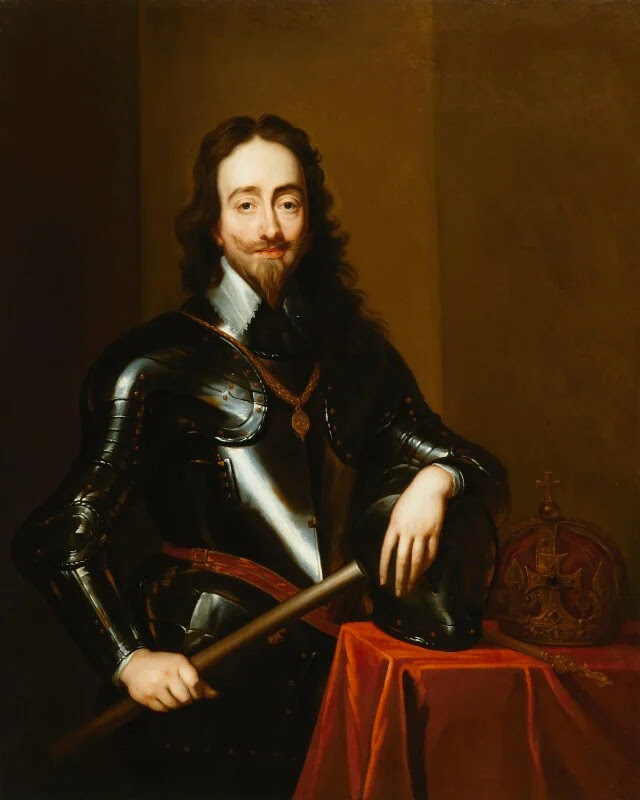
In face of the Parliamentarian dismantling of the Elizabethan Settlement - beginning in 1643 and completed in 1645 - Charles addressed "the Protestant Churches beyond the Seas", presenting "the Anglicane Church" as the jewel of the Reformed Churches, its liturgy and discipline admired by those Churches beyond the Seas. This was a classic Conformist understanding, shared by both Laudians and non-Laudians, and to be repeated by Conformist apologists after the Restoration (e.g. Durel's work being an obvious and significant example). Another feature shared by 'Reformed Conformists' and Laudians is the invocation of the Lutherans of Germany, Denmark, and Sweden, together with the Bohemians, alongside the Reformed French, Swiss, and Belgians.
The fact that both Laudian and 'Reformed Conformist' could agree with 'The Declaration' - and I suspect that study of the authorship of the document might indicate that representatives of both groupings were involved in writing it - is another reminder that the differences between the two groupings are much less significant than some accounts suggest. Crucially, at this moment, whatever their disagreements about predestination and the so-called 'altar controversies', and despite the earlier and utterly foolish equivocation by some Reformed Conformists, they were now united in defending the Elizabethan Settlement.
'The Declaration ... to the Protestant Churches beyond the Seas' exemplifies, therefore, the Hookerian nature of the Caroline defence of Church of England, against those who - following on from the agitations against episcopacy and liturgy in the reigns of Elizabeth and James VI/I - used Parliament as a means of dismantling the Elizabethan Settlement. As such the 1644 Declaration stands in succession to the vow Charles gave earlier in his reign, in 1628:
neither shall We ever give way to the authorizing of any thing whereby any Innovation may steal or creep into the Church, but preserve that unity of Doctrine and Discipline established in the time of Queen Elizabeth.
Reading 'The Declaration', it is Hooker who comes to mind, Hooker who defended the polity and order, rites and ceremonies of the Church of England against those agitating for 'further reformation', Hooker who warned of "the manifold dangerous events likely to ensue upon this intended reformation, if it did take place"
there is in everie of these considerations most just cause to feare least our hastines to embrace a thing of so perilous consequence should cause posteritie to feele those evils, which as yet are more easie for us to prevent then they would be for them to remedy (LEP, Preface 8.14).
It was the Laudians who recognised this wisdom, that the agitation against episcopacy and liturgy - left to fester - was disastrously infecting the both the commonwealth and the Church, tearing apart the peace of both.
And so it was, on 13th May 1644, Charles I addressed "the Protestant Churches beyond the Seas", in defence of the Elizabethan Settlement, against those who raged against - to again quote Hooker - "the peace and quietnes of this Church".
From 'The Declaration':
this most holy Religion of the Anglicane Church, ordain'd by so many Convocations of Learned Divines, confirm'd by so many Acts of National Parliaments, and strengthned by so many Royal Proclamations, together with the Ecclesiastick Discipline and Liturgy thereunto appertaining, (which Liturgy and Discipline the most eminent of Protestant Authors, as well Germans as French, as well Danes as Swedes and Switzers, as well Belgians as Bohemians, do with many Elogies, and not without a kind of envy, approve and applaud in their publick Writings; particularly in the Transactions of the Synod of Dort, wherein, besides other of Our Divines who afterwards were Prelates, one of Our Bishops assisted, to whose Dignity all due respects and precedency was given;) this Religion, We say, which Our Royal Father of blessed Memory doth publickly assert in that His famous Confession address'd (as We also do this Our Protestation) to all Christian Princes, this, this most holy Religion, with the Hierarchy and Liturgy thereof, We solemnly protest that, by the help of Almighty God, We will endeavour, to Our utmost Power and last period of Our Life, to keep entire and inviolable, and will be careful, according to Our duty to Heaven, and the tenor of the aforesaid most sacred Oath at Our Coronation, that all Our Ecclesiasticks in their several degrees and incumbences shall preach and practise the same.
Comments
Post a Comment